
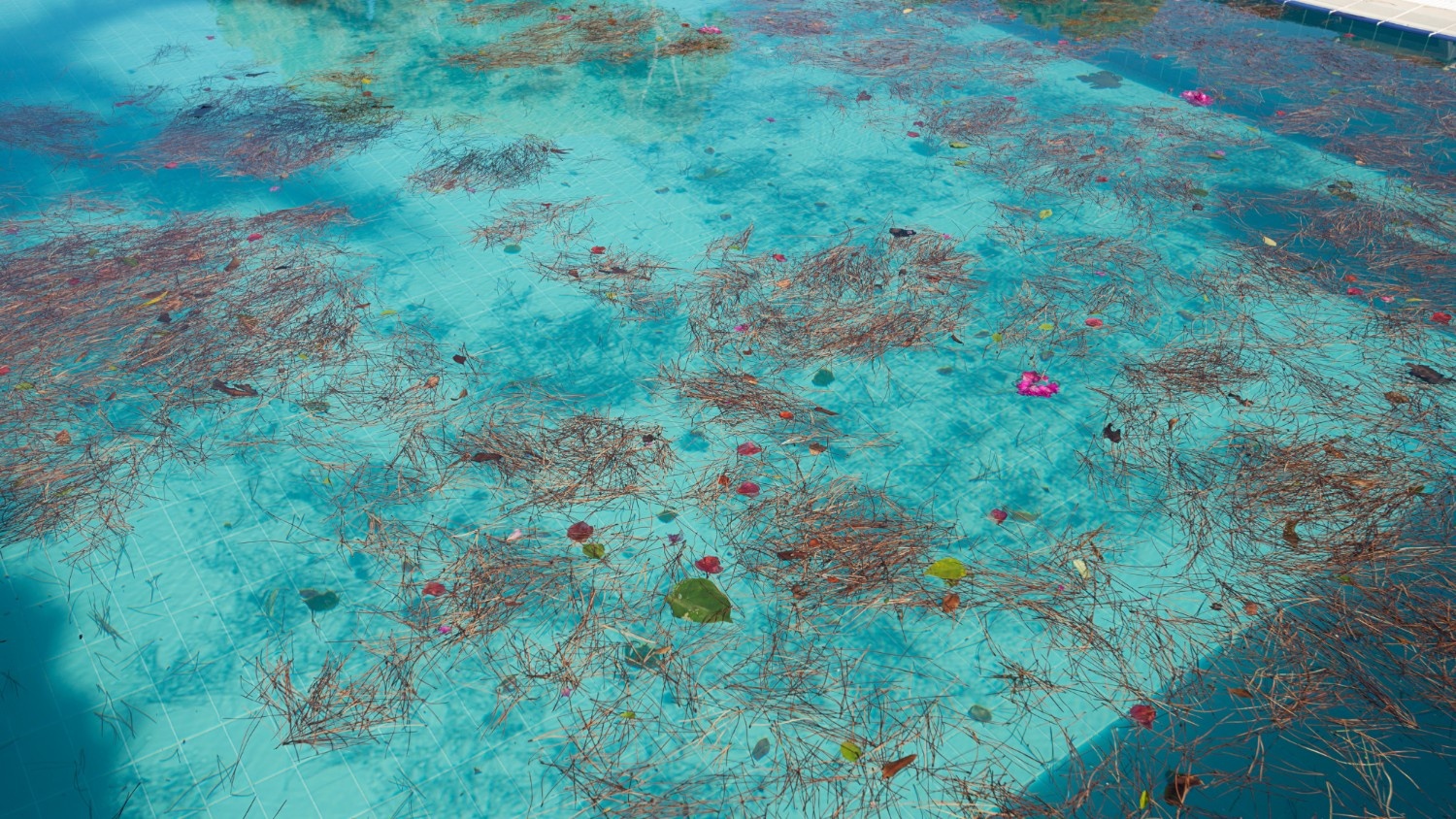
When a big storm hits Sonoma County, your backyard oasis can take quite the beating. Between flying leaves, overflowing water, and off-the-charts chlorine levels, your pool might look more like a pond than a pristine retreat.
As local pool builders in Sonoma County, we’ve seen it all; from leaf-covered laps to pumps clogged with redwood bark. If your pool took a hit from recent weather, don’t stres: we’ve got a step-by-step recovery plan to get things sparkling again.
Step 1: Scoop Out the Storm Mess
First things first: grab that skimmer net. After a storm, your pool’s going to have its fair share of twigs, leaves, maybe even the occasional unlucky critter.
- Use a leaf net to scoop up debris from the surface.
- Empty out your skimmer and pump baskets.
- Give the surrounding deck a quick clean too. Less mess around the pool means less that can blow back in.
Pro Tip: Got trees like oaks or redwoods nearby? We recommend doing a second pass with a vacuum to catch all the fine stuff that sinks fast. Or if you hate having to skim your pool, consider a custom pool enclosure!
Step 2: Check the Water Level
Rainstorms usually mean your pool is either overflowing or has a weird drop in water level.
- If it’s too full, use your waste line or a submersible pump to bring it down to halfway up the skimmer.
- If it’s too low (sometimes storms mess with auto-fill systems), top it off with fresh water before doing any water testing.
Step 3: Balance the Water Chemistry
Rainwater can really mess with your pool’s chemistry. It’s often acidic, which throws off your pH and chlorine levels, perfect conditions for algae to move in.
- Test the water using strips or a reliable test kit.
- You’ll probably need to:
- Adjust the pH (aim for 7.4–7.6)
- Bump up alkalinity (target range: 80–120 ppm)
- Shock the pool to kill off anything lingering
- Adding an algaecide is a smart move too, especially if it’s warm out.
Real Talk: After one of last year’s heavy storms, a Sonoma County client’s pool lost almost all its chlorine overnight. Don’t just pour more chemicals in, get those levels balanced first!
Step 4: Clean the Filter
Your pool’s filter probably worked overtime during the storm and it’s not happy.
- Cartridge filter? Take it out and hose it down thoroughly.
- Sand or DE filter? Run a full backwash cycle.
- Check your filter pressure gauge. If it’s 8–10 PSI above normal, that’s your sign to clean it.
Quick Story: One of our clients on a vineyard property had a filter so clogged it shut the system down completely. Now, post-storm filter checks are part of their regular routine.
Step 5: Give Your Equipment a Quick Checkup
Storms can be sneaky. Even if everything looks okay, your equipment might have taken a hit.
- Inspect pumps, heaters, timers, and automation systems.
- Look for signs of water damage, electrical issues, or weird noises.
- If something seems off or isn’t working right, call in a pro before it gets worse.
Worth Noting: We once found a control panel with moisture inside that shorted out a spa heater. A quick inspection would’ve saved a costly repair.
Step 6: Run Your System and Brush It Down
Once your pool’s clean and balanced, it’s time to run the pump and brush the walls.
- Let your system circulate the water for at least 12–24 hours.
- Brush down all surfaces, steps, and corners, algae loves to hang out in hidden spots.
- Keep an eye on the water clarity over the next day or two.
Keep It Clean, Keep It Clear with Sonoma Pool & Spa
Don’t sweat it when a storm hits. From skimming and shocking to filter checks and brushing, this routine helps your pool bounce back faster and stay safer for everyone.
And if you’d rather not do it solo? That’s what Sonoma Pool & Spa is here for!
Give us a call at 707-396-7526 or contact us online now to schedule service.

Owner / President, Sonoma Pool & Spa, Inc.
Owner of Sonoma Pool & Spa, located in Sebastopol.