
Pool Contractor or General Contractor? Why a Pool Specialist Is the Right Call

Pool Contractor or General Contractor? Why a Pool Specialist Is the Right Call

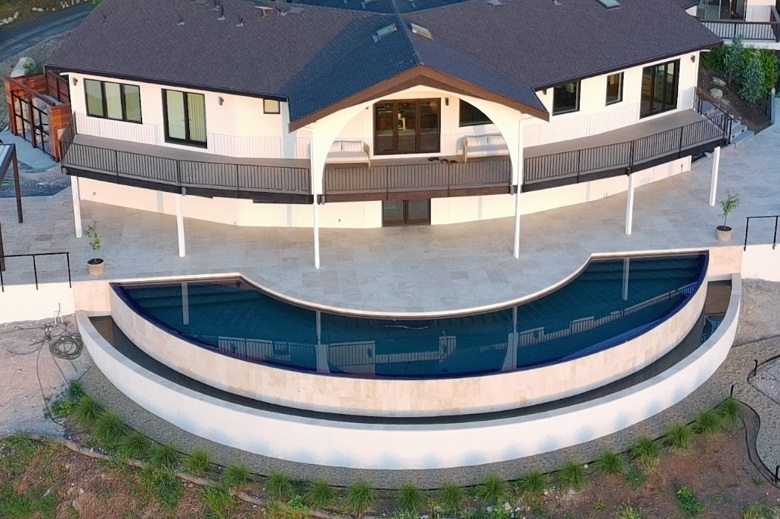
Aerial view of a white hillside home with a dark brown roof, curved black railings, and a crescent-shaped deep blue infinity pool.

A general contractor can build a beautiful home. That does not mean the same team should build the pool that sits next to it. Across this region, GC-built pools that later need repair tend to share a familiar pattern. Cracked shells, failing plumbing, inadequate permits, and owners who paid twice because the first team was working outside their expertise.

If you’re planning a pool in Sonoma or Napa County, the person holding your contract should be one of the licensed pool contractors in Sonoma County who does this work every day.

This guide covers what California requires, why pool mistakes are so hard to reverse, and how the specific conditions of this region affect the project.

Key Takeaways

  • California requires a C-53 Swimming Pool Contractor license for pool construction. A general B license alone does not cover it in most cases.
  • Pool construction errors are frequently structural and buried, which makes them expensive or impossible to correct after the fact.
  • Sonoma County soils, slopes, water rules, and wildfire exposure create engineering challenges that generalist builders often underestimate.
  • Experienced pool builders design around these local conditions from day one instead of discovering them mid-build.
  • The cheapest bid on paper is often the most expensive pool once repairs, resurfacing, and equipment replacement enter the picture.
  • A dedicated pool builder brings specialized crews, engineering fluency, local permitting knowledge, and single-source warranty ownership that a generalist typically cannot match.

Pool Construction is Different Than General Home Building

Homeowners planning a remodel or new build often already have a general contractor they trust. It feels efficient to hand the pool to that same person. One point of contact. One invoice stream. One team on site.

The assumption is that a pool is just another feature of the home, similar in complexity to a patio slab or an outdoor kitchen.

In practice, a residential pool is a permanently installed, water-holding structural vessel with many systems attached to it, including:

  • Hydraulic
  • Electrical
  • Chemical
  • Life-safety

The gap between concrete work and pool construction is much wider than it looks from the outside. That gap is where the expensive mistakes live.

Pool Construction Licensing in California

California licenses pool construction separately for a reason.

The Contractors State License Board (CSLB) issues a C-53 Swimming Pool Contractor classification specifically for the work required to build, remodel, or service pools.

The classification covers:

  • Layout
  • Excavation
  • structural shell
  • Plumbing
  • Filtration
  • Electrical bonding
  • Plaster
  • The interconnected systems that keep water contained, circulating, sanitized, and safe

A general license allows a contractor to oversee projects involving two or more unrelated trades. In some scenarios, a B-licensed contractor can subcontract pool work to a C-53 holder. What a B license alone does not do is authorize that contractor to self-perform pool construction.

Verify the C-53 classification at cslb.ca.gov before signing. No C-53 on the record means the pool will be subcontracted.

Pool Construction Mistakes Are Hard to Repair

Pool errors have a specific character that makes them different from typical home construction mistakes.

Concrete Covers A Lot of Mistakes

Once concrete is poured, decking is set, and coping is installed, the plumbing lines, bond wire, and structural steel are inaccessible without demolition.

Shell Failures Are Not Cosmetic

A shell that was under-engineered for the soil or poorly reinforced will crack. Crack repair is possible. Restoring the original design intent and warranty coverage after a major structural failure is often not.

Plumbing Errors Are Costly and Hard to Spot

Undersized plumbing, poorly placed returns, or an incorrectly sized pump can:

  • Starve filtration
  • Shorten equipment life
  • Create dead zones where algae blooms
  • Cause higher electrical bills

Fixing hydraulics after the fact means opening decks and possible demolition.

A Pool Built Wrong Costs More to Fix Than to Build

A resurface is measured in thousands. A partial rebuild is measured in tens of thousands.

A full teardown and rebuild on a failed shell can approach the cost of the original project.

The best time to prevent all of this is at the design stage, with a builder whose entire business is pool construction.

Local Conditions Influence the Build

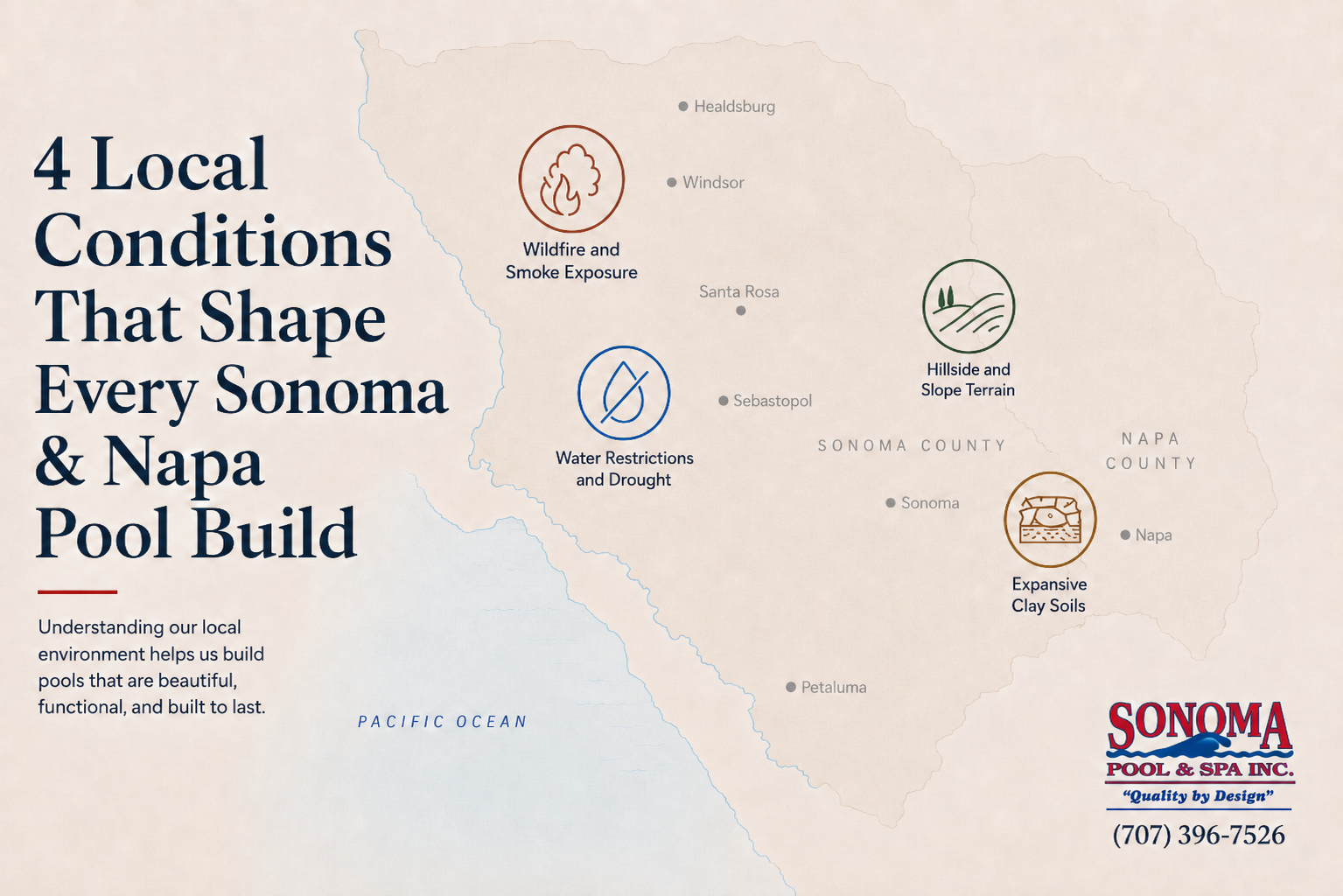
This region rewards builders who know the ground they’re working on. Four local factors regularly reshape project plans, and all four are commonly underestimated by teams without pool-specific experience here.

Expansive Clay Soils

Large parts of the county sit on clay-heavy soils that expand when wet and contract when dry. That seasonal movement puts continuous pressure on a pool shell. Locally experienced builders proactively reduce the risk of settlement cracks and coping separation with:

  • Proper site evaluation
  • Soils reports where warranted
  • Deeper footings
  • Engineered rebar schedules
  • Correct backfill

Pools designed without accounting for local soil behavior are the ones that typically need repair 5 to 10 years later.

Hillside and Slope Construction

Vineyard estates, ridge homes, and view lots throughout the North Bay often mean building on grade. Hillside pools require:

  • Retaining walls
  • Structural engineering for lateral loads
  • Careful drainage
  • Precise weir engineering to keep lines clean without hydraulic problems

Pool contractors in Sonoma County who have built dozens of hillside pools approach these projects differently than a builder doing their first one.

Wildfire, Smoke, and Ash Exposure

Post-2017, homeowners across the North Bay carry a working awareness of what wildfire season does to outdoor systems.

  • Ash and fire retardant contaminate pool water and can etch plaster if not addressed quickly
  • Equipment pads exposed to embers need thoughtful placement and material choices
  • Auto-covers reduce contamination during smoke events

These aren’t features a general builder tends to raise during design conversations, even though they should be.

Water Restrictions and Drought Planning

Sonoma County has run through multiple drought cycles. Local water agencies periodically restrict or regulate:

  • New pool fills
  • Refills after service
  • Irrigation-adjacent uses

Local knowledge of water agency rules, fill schedules, and efficient equipment specifications keeps a pool compliant and reduces long-term water loss.
Where Pool-Specific Expertise Makes the Biggest Difference

A dedicated pool builder brings four things a generalist typically cannot match.

  • Specialized crews. The same team excavates, sets steel, plumbs, gunites, and finishes pools every week of the year. Repetition builds precision.
  • Engineering fluency. Pool-specific structural engineering, hydraulic calculations, and equipment sizing are core practice, not a subcontracted concern.
  • Local permitting knowledge. Every Sonoma County jurisdiction, from Santa Rosa to unincorporated areas, has its own review process. Familiarity shortens timelines and reduces revisions.
  • Warranty ownership. When one company designs, engineers, and builds the pool, warranty coverage is written and honored by that same company. No finger-pointing between trades.

The Hidden Cost of Handing the Pool to A GC

Handing the pool to a general contractor usually means pool decisions get delegated to the lowest subcontractor bid, and the homeowner loses direct access to the person making the structural and design calls that matter most.

A licensed pool contractor who handles design, engineering, permitting, and construction in-house gives you genuine single-source accountability.

Your GC coordinates the rest of the site. The pool specialist owns the pool. That division produces better outcomes than folding everything into a general contract and hoping the subcontractor chain holds.

How to Start a Pool Build The Right Way

If you’re 6 to 12 months from breaking ground, the most useful step right now is a design consultation with a licensed pool builder before your general contractor draws the pool into the site plan.

The pool contractor’s input on placement, grading, drainage, and equipment location can reshape the entire backyard design for the better, and it’s easier to do at the concept stage than after framing.

Bring your questions. Ask for:

  • License numbers
  • How many pools the team has built in your specific city or on your specific soil type
  • What the warranty covers and who honors it

Any qualified builder will welcome that conversation.

Start With a Free Design Consultation and Estimate

A pool is one of the longest-lived improvements on a property. It deserves a builder licensed for the work, with decades of local experience behind them.

Sonoma Pool & Spa has been designing and building custom pools across Sonoma and Napa Counties since 1973. Our company holds both C-53 and B classifications, manages design, engineering, and construction in-house, and backs new pool construction with a lifetime structural warranty.

Every project starts with a free design consultation and site evaluation. Contact us online or call Sonoma Pool & Spa at (707) 396-7526 to schedule your free estimate today.

Frequently Asked Questions

Why does hiring a licensed pool contractor matter so much in California?

California requires a C-53 license for pool construction because pools involve systems general construction training doesn’t cover. Hiring a C-53 holder means the builder has been tested and licensed specifically for the job.

The recurring ones:

  • Under-engineered shells for local soils
  • Undersized or poorly routed plumbing
  • Incorrect electrical bonding
  • Poor drainage around the deck
  • Equipment sizing that does not match the pool volume

Most of these are buried under concrete before the homeowner ever sees the finished pool.

  • Ask for the CSLB license number and verify the C-53 classification.
  • Ask how many pools the team has built in the same city or on similar soil and grade.
  • Ask whether design, engineering, and construction are handled in-house or subcontracted.
  • Ask what the structural warranty covers and who honors it.
  • Ask to see completed local projects.